Category: Uncategorised

  • Unite 1:Identifying examples of the principles of animation in professional work.

    I chose the animation clip from Wallace & Gromit: A Grand Day Out (1989) by Aardman Company. This is a stop-motion animation. The animation clip depicts the plot where the protagonist, Wallace, designs rocket blueprints in the basement and plans to have a picnic on the moon.

    In the scene, Wallace is sitting at the desk, thinking about how to design the rocket. However, he didn’t start by concentrating on the design right away; instead, he got distracted first. The animator used a large number of subtle movements to show Wallace’s distracted state of mind.

    The clip shows several of Wallace’s actions: First, he picked up the pencil sharpener and began to sharpen the pencil. After drawing a picture, a very dissatisfied expression appeared on his face, and he pulled out a new piece of drawing paper. After thinking for a while, he drew a new picture. However, the director added a humorous plot in this scene: He drew a tic-tac-toe board instead of a rocket design plan. After finishing this picture, Wallace raised his right hand and made a confident gesture, and then took out a new piece of drawing paper to draw again. This time, the extent of his drawing movements also increased, and finally, he designed a rocket blueprint.
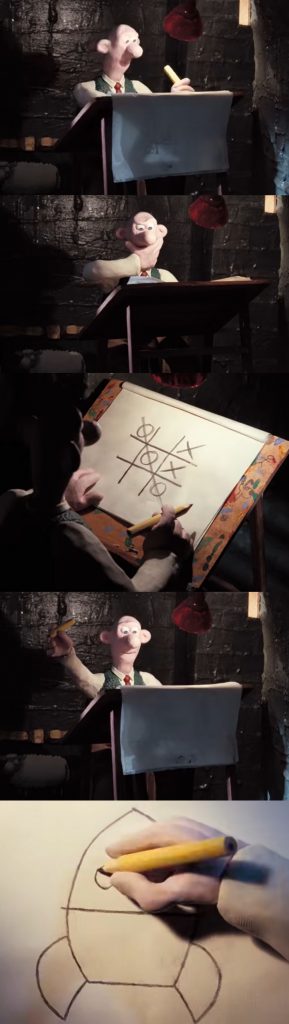
    I think the advantages of Wallace’s actions are as follows: His actions can precisely reflect his state at that moment (the state of being distracted and the state of concentrating on designing the blueprint). Another advantage is that the humorous reversal plot added by the director in this segment is intended to make the audience believe that Wallace really designed a rocket, but in fact, he didn’t concentrate on designing, but only drew a tic-tac-toe grid. This contrast creates a humorous atmosphere, and Wallace’s actions and expressions deceived the audience.

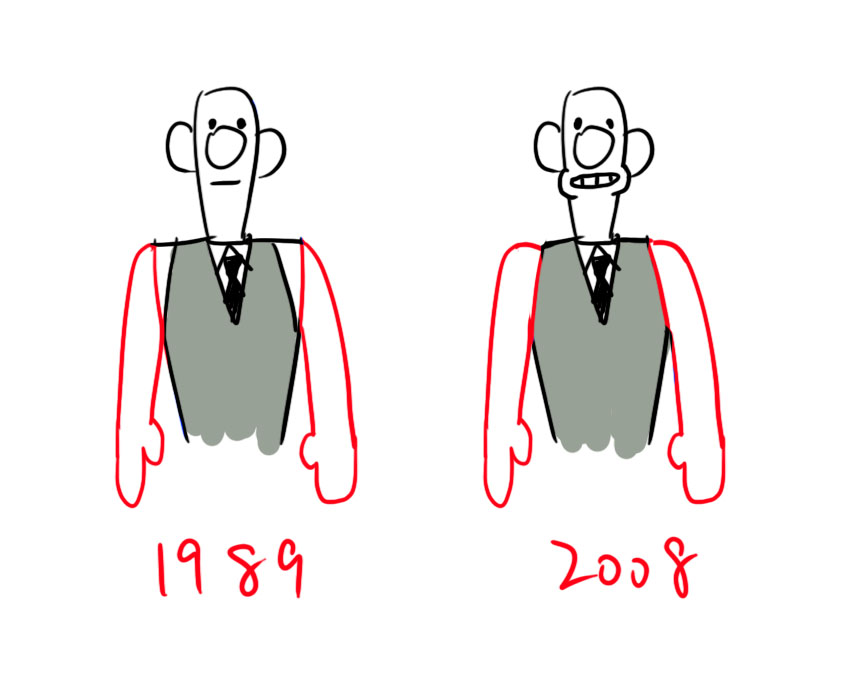
    I think there are areas that need improvement for this action: When Wallace was drawing the sketches, the movement of his upper arm did not follow the normal movement pattern of a human’s upper arm. The biggest problem lies in his upper arm structure. In the simplified stop-motion animation character body, the important connection point between the upper arm and the body is the biceps muscle.
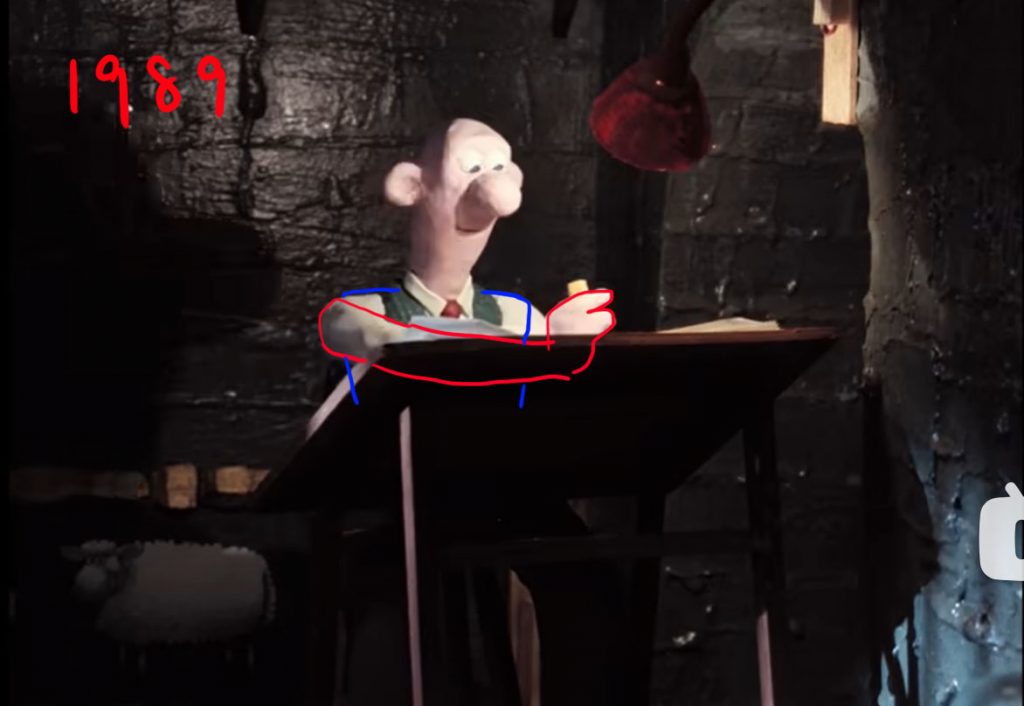
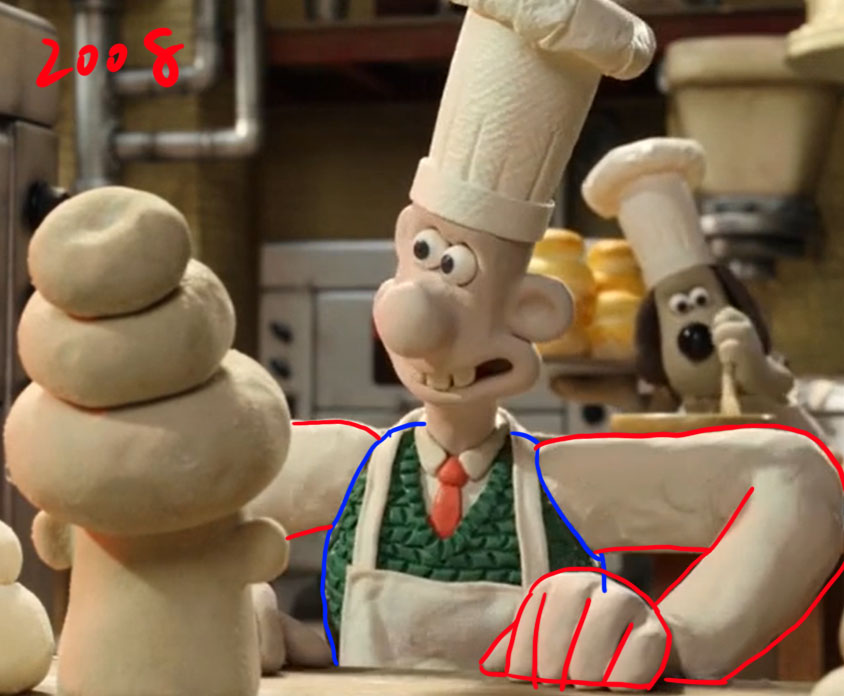
    If Wallace lifts his arm, the biceps muscle also needs to move along with the upper arm. However, due to his incorrect body design, he was unable to make the biceps muscle move. Later, the director also became aware of this issue. In the subsequent works after Wallace & Gromit, they redesigned Wallace’s shoulder and neck
  • Unite 3: Self-reflected account of your simulated work experience and professional animation practice.

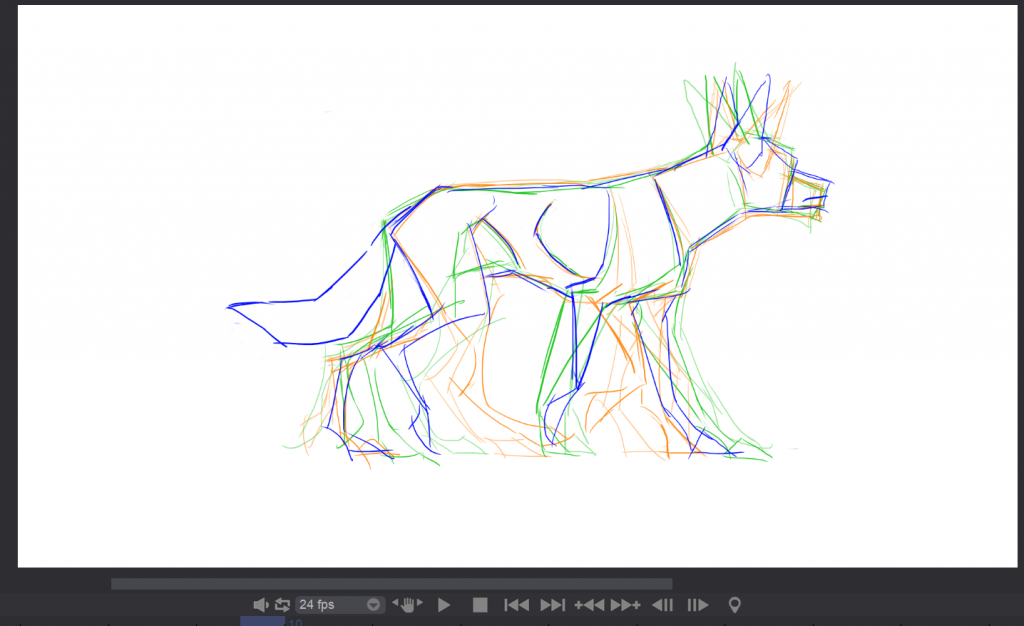
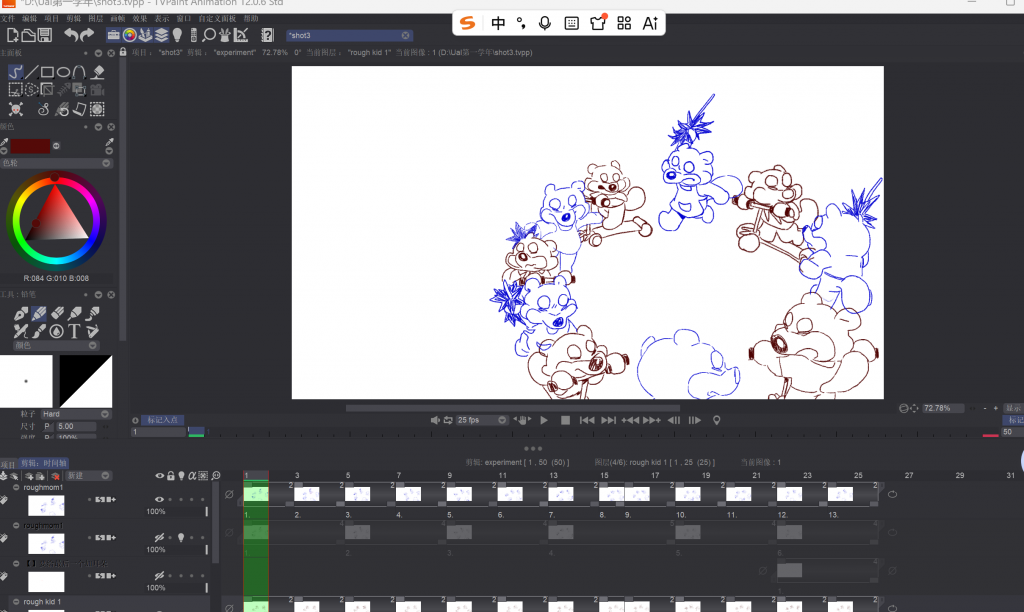
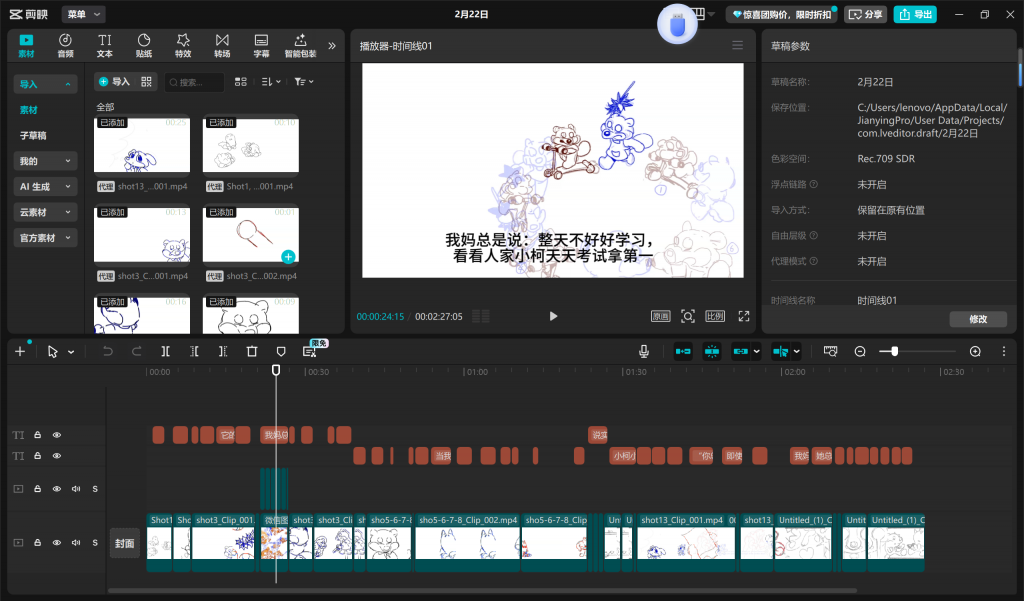
    I discussed the project cooperation with the senior student in Year 2 via email. The senior student measured which tasks I was suitable for by asking me to draw rough drafts (for character style and animation). I completed the following parts: the draft of the editing timeline (adding character voices and adjusting the timeline), drawing a fragment of the keyframes (dog mother and dog children’s key frame), and creating the In-between of the animation.

    During my interaction with the senior student, I successfully completed the task and promptly resolved the problems encountered during the collaboration. I tried my best to communicate with the senior student about the issues and followed the reference animation provided by the senior to draw the keyframes. When helping the senior student edit the timeline draft, I encountered a minor problem: I am accustomed to using Jianying for animation editing, including adjusting the timeline and adding sound effects. However, senior students prefer to use PR for editing. But during the communication, we did not verify the editing software aspect with each other. This resulted in my inability to find the draft materials I needed in the file she provided. The senior student’s feedback was: PR is a more professional animation software. If I need to collaborate with an animation company in the future, I need to learn how to use it.

    In this collaboration, the issue I need to address is: It is essential to have more detailed communication with the project party in advance to avoid any problems during the cooperation process.

    In this collaboration, I attempted to add character dialogue sounds, timeline editing, and draw keyframes and In-between frames. These steps are very similar to the division of labor in commercial animation (such as storyboard designers, post-production sound effect producers, and In-between frame drafters). I am very glad to have this opportunity for collaboration, which has helped me become more familiar with the necessary steps in producing an animation.

    What I have learned: I have understood the important steps in animation production.

    Question: I am not familiar with using the PR software for animating, so during the communication with the senior, we failed to confirm the software we both prefer. As a result, the final file submitted to the other party was in a format that was not very convenient for subsequent project collaboration.

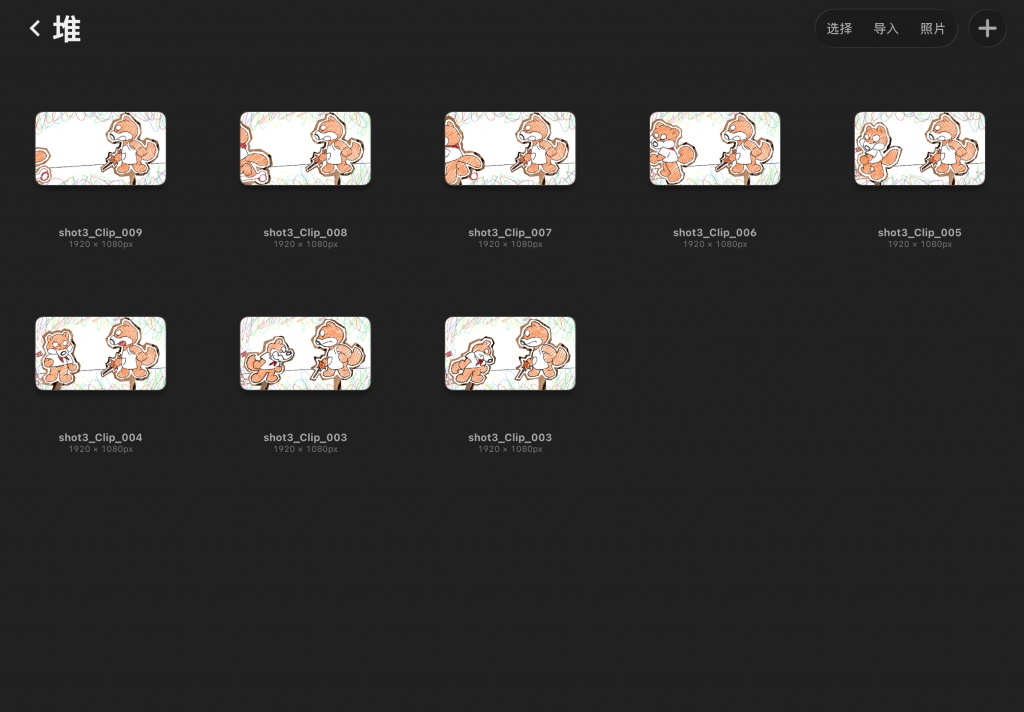
    This animation project incorporates 2D animation style frames that simulate stop-motion animation. I was responsible for drawing the key frames and In-between frames of two animation segments. To better fit the project’s style, I referred to the stop-motion animation storyboard. I minimized the number of In-between frames and reduced the continuity of the character’s movements in each frame. This made the animation closer to the style of stop-motion animation.

    This project collaboration was a challenge for me. This project features cute cartoon characters, but I am skilled at drawing exaggerated monster characters. Therefore, in this project, I needed to change my drawing style to adapt to the style of this project. From this experience, I realized that professional animators need to learn to draw different styles to match different types of animation projects.

  • Unit 2: Practice-based research – Storyboards, sketches, research, design work, experiments, and tests.

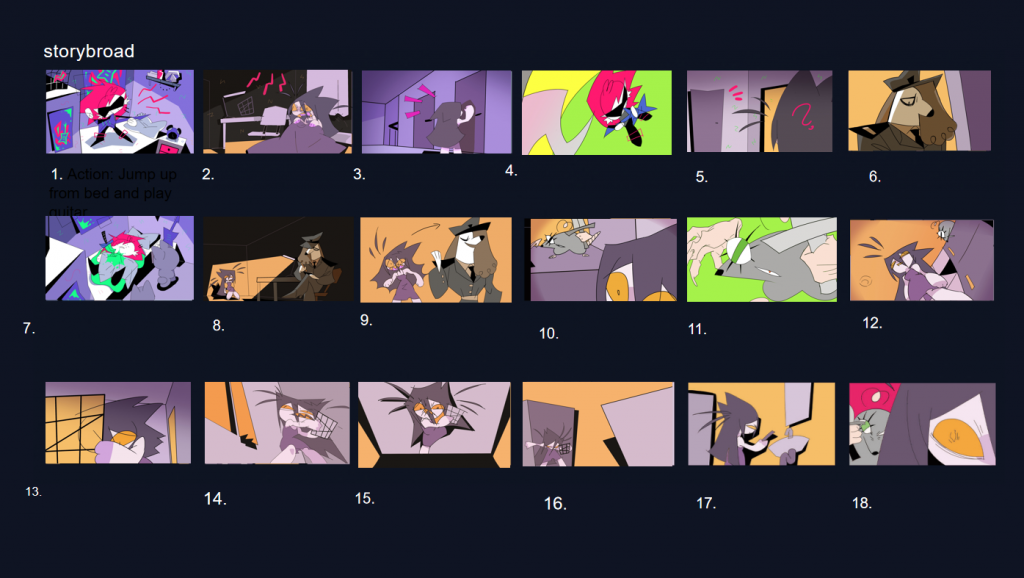
    Storyboard: When creating a storyboard, it is necessary to clearly present the entire story of the animation through shots. The most important aspect is the coloring of the pictures. A well-structured shot with a clear black-and-white contrast and correct color balance can enable the audience to understand the characters’ movements and spatial relationships in this scene. Below the shot, the lines of dialogue for the characters should be written, and a brief description of the characters’ emotions and actions should also be provided.

    Sketch: Before creating an animation, sketching is extremely important. Drawing sketches can help us discover new animation ideas (including drawing from life and copying).

    Design Work: I studied how to create animated characters (appearance and character story). Many creators who have little knowledge of character design concepts tend to add many decorative elements to their characters . They want to make them stand out. However, the final result often leaves their characters lacking in key design. Therefore, I believe that a good character design should have a memorable element ,a simple and prominent design feature with a clear focus on the key elements.

    During my studies at Saint Martin, I realized the benefits of simplifying the appearance of animated characters, such as facilitating the drawing process. Therefore, the key to making the animation character design stand out is to determine the appearance of the character based on the character’s personality and story, so that when the audience sees the character’s appearance, they can recognize the basic setting of the character.

    Research: Currently, I am focusing on the research of character design. I selected two characters from my personal projects as my research examples. Here are my design ideas:

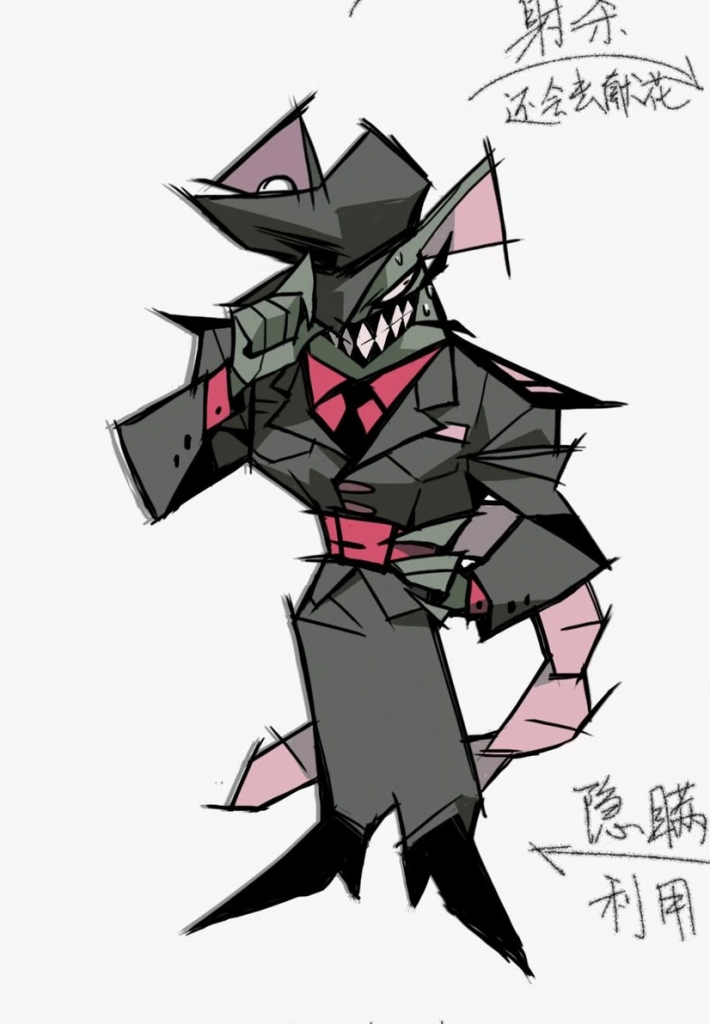
    Zazhigalka (Female): When designing this character, I aimed to create an Asian police officer living in the region of Yugoslavia. So, she wears police attire. In terms of body type, I made this character appear muscular, which makes her body shape more in line with that of a police officer (and this character has a military background). Since she is Asian, I chose the mask culture and black long hair from the Asian region as the memory points for this character.

    I once posted the design draft of this character on the artist community, and her appearance sparked some discussions. Many people who saw her muscular figure thought she was male.

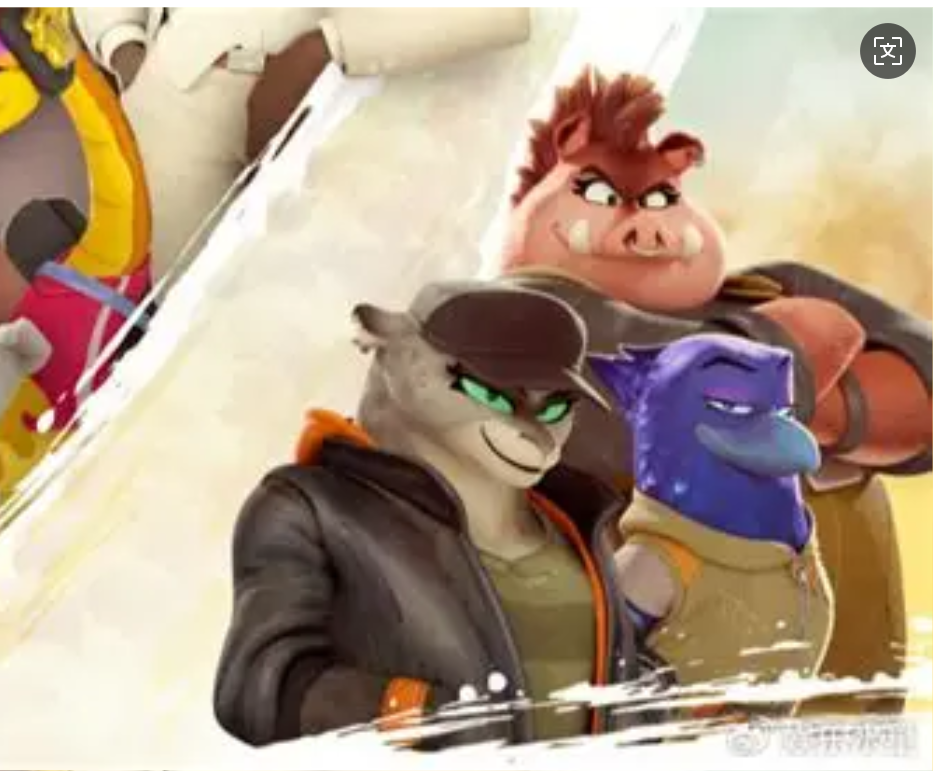
    I believe that female characters can have very developed muscles, just like the designs of many well-known animated characters(The Bad Guys 2)。 This is also the reason why I gave this character a robust physique.

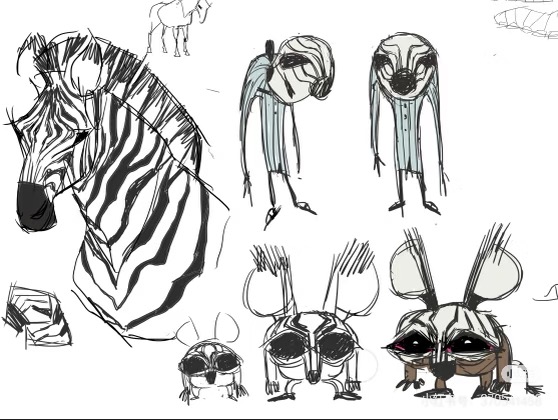
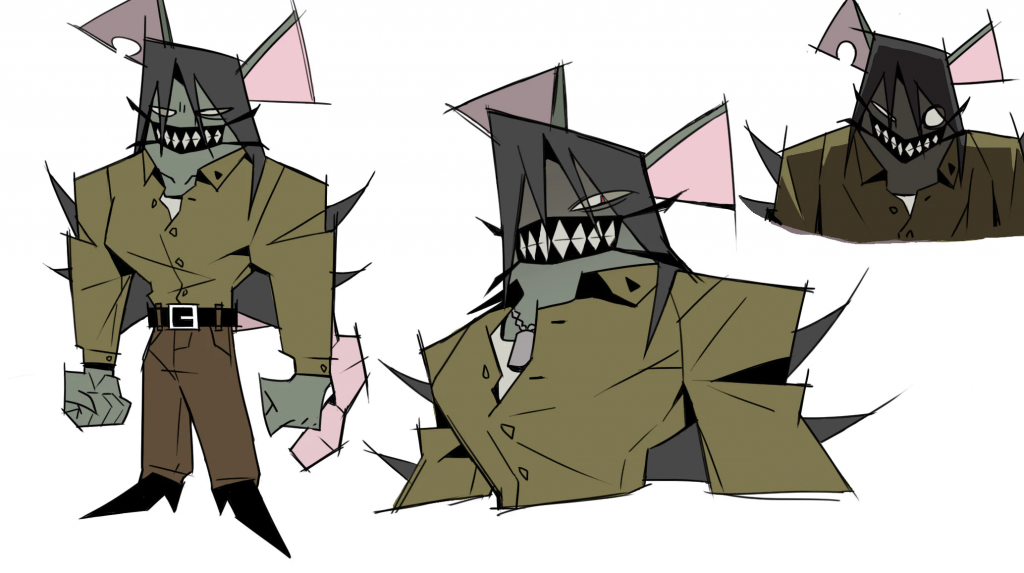
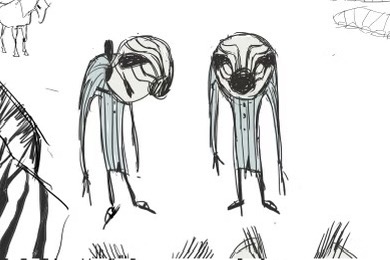
    Zebra: This character is an important part of the story plot of my project. He is a murderer and also a zebra with self-awareness disorders. He is wearing the hospital gown of a mental institution. To reflect the self-awareness disorder feature of this character in terms of appearance, I did not design this character’s appearance according to the design features of a zebra. I drew the appearance of this zebra as a caterpillar and hoped that this design would trigger the viewers’ strange feelings and add a sense of mystery to the character. During the design process, I also discovered that adding asymmetrical designs to the character would make him look even stranger. This method can be used to design villain characters. That’s why I added a asymmetrical a asymmetrical arm to this character.

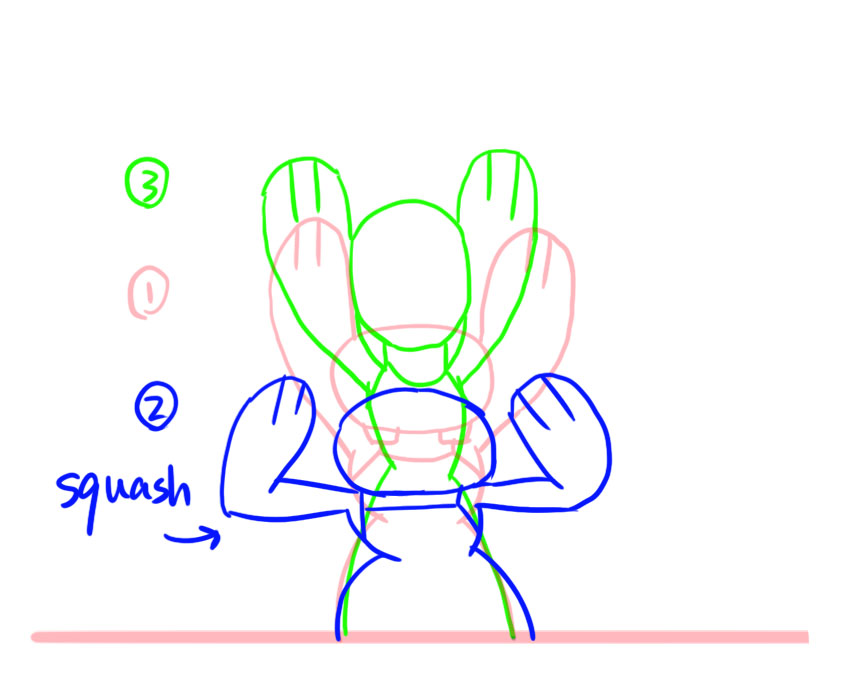
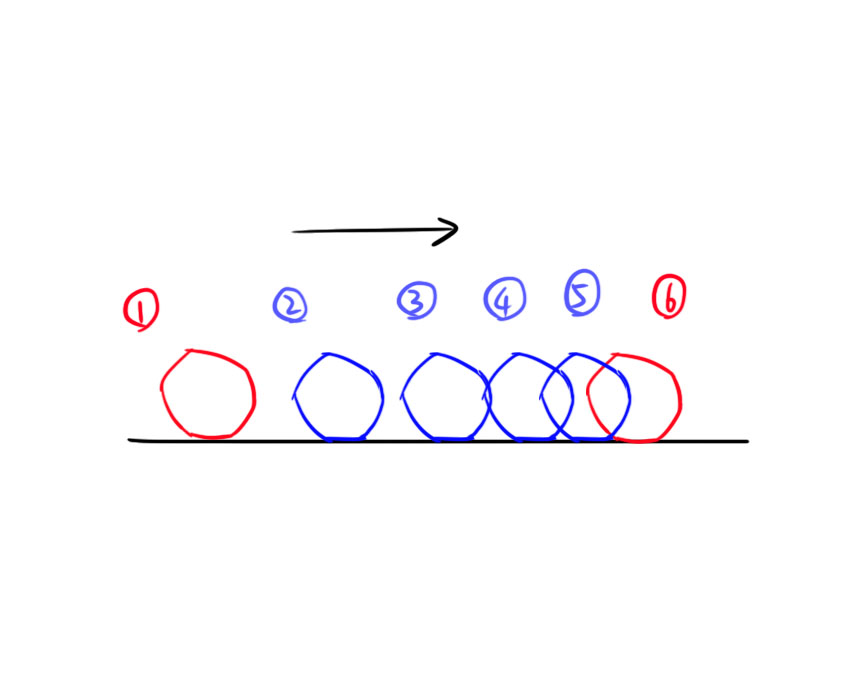
    Experiments and Tests: Through this semester’s exercises on the principles of motion, I have learned a lot. I had studied the basic principles of animation in my undergraduate studies, but it was not in-depth. Before taking the animation course at St. Martin, I was accustomed to using the squash frame(key frame + squash frame)when drawing animations.

    The advantage of this approach is that it allows for a relatively smooth movement with a small number of frames. However, I believe that adding such an action pattern to every movement would make the character’s movements too stiff. To further enrich my character movements, in this CSM practice on the principles of character animation, my goal is to learn how to draw more refined movements (character facial expressions and action details) and make the character movements closer to the natural movement laws. I tried removing the squash frame and making the character’s movements more exaggerated. I realized that designing keyframes in this way would make the movements more natural